Cotton Lycra vs Rib Knit vs French Terry: What’s the Difference?

This blog is for you if you’ve ever browsed knit fabrics and wondered:
“Do I have to use rib knit for cuffs?”
“Can I use French terry for a t-shirt?”
“Why are there different weights of Cotton Lycra?”
While all three are knit fabrics, and often have the same fibre content (95% cotton, 5% spandex) they behave very differently, and choosing the wrong one can completely change the fit and feel of your finished garment.

Today we’re breaking down the differences between cotton lycra vs rib knit vs French terry, to make your fabric decisions easier. Make sure to check out our Fabric Base Info page for washing instructions and details on other fabric compositions and widths.
* An important note on lycra - although lycra is commonly used in the names of fabrics across the industry, it’s technically a brand name, and the official name that is used in NZ to label to match labelling requirements is actually elastane.
What Is Cotton Lycra?
Cotton Lycra (also known as CL, or called cotton spandex or cotton elastane) is a smooth knit fabric with fabulous stretch thanks to its lycra content. The name is often shortened to CL, with the weight in grams per square metre (gsm) listed after - e.g. we sell CL220 (220gsm) and CL270 (270gsm), and our solids are CL230. The main difference in these is the feeling in a garment, rather than necessarily a weight difference - CL220 is lighter, very stretchy and has great recovery. CL270 is slightly more compressive feeling, has very slightly less stretch percentage, and would be ‘thicker’ feeling and tighter when worn if the same pattern was used.

Key Features of 3am Threads Cotton Lycra:
4-way stretch (horizontal and vertical)
Excellent recovery
Smooth surface
Medium weight (we sell a 220gsm and 270gsm)
Best For:
T-shirts
Dresses
Leggings
Baby and kidswear
Everyday basics
Cotton lycra is often the “default” knit fabric for garment sewing because it’s stable enough to sew easily, but stretchy enough to be comfortable. Please note
if you have never used it that it is common for lighter weights of CL to roll at the edges once prewashed, or when cut - this can be flattened somewhat by ironing if really needed, weighted down, or pinned thoroughly, but doesn’t affect how the fabric sews together and eventually isn’t a problem once you’ve done it a few times! A lot of patterns will call for rib knit for the cuffs and neckband, but we find our CL220 especially is also normally just fine for these!
*CL is often called Cotton Jersey in the UK and Europe. Cotton Jersey here in NZ generally refers to a fabric that is 100% cotton and has mechanical stretch horizontally only, so be sure to check your fibre content if you’re buying Cotton Jersey!
What Is Rib Knit?
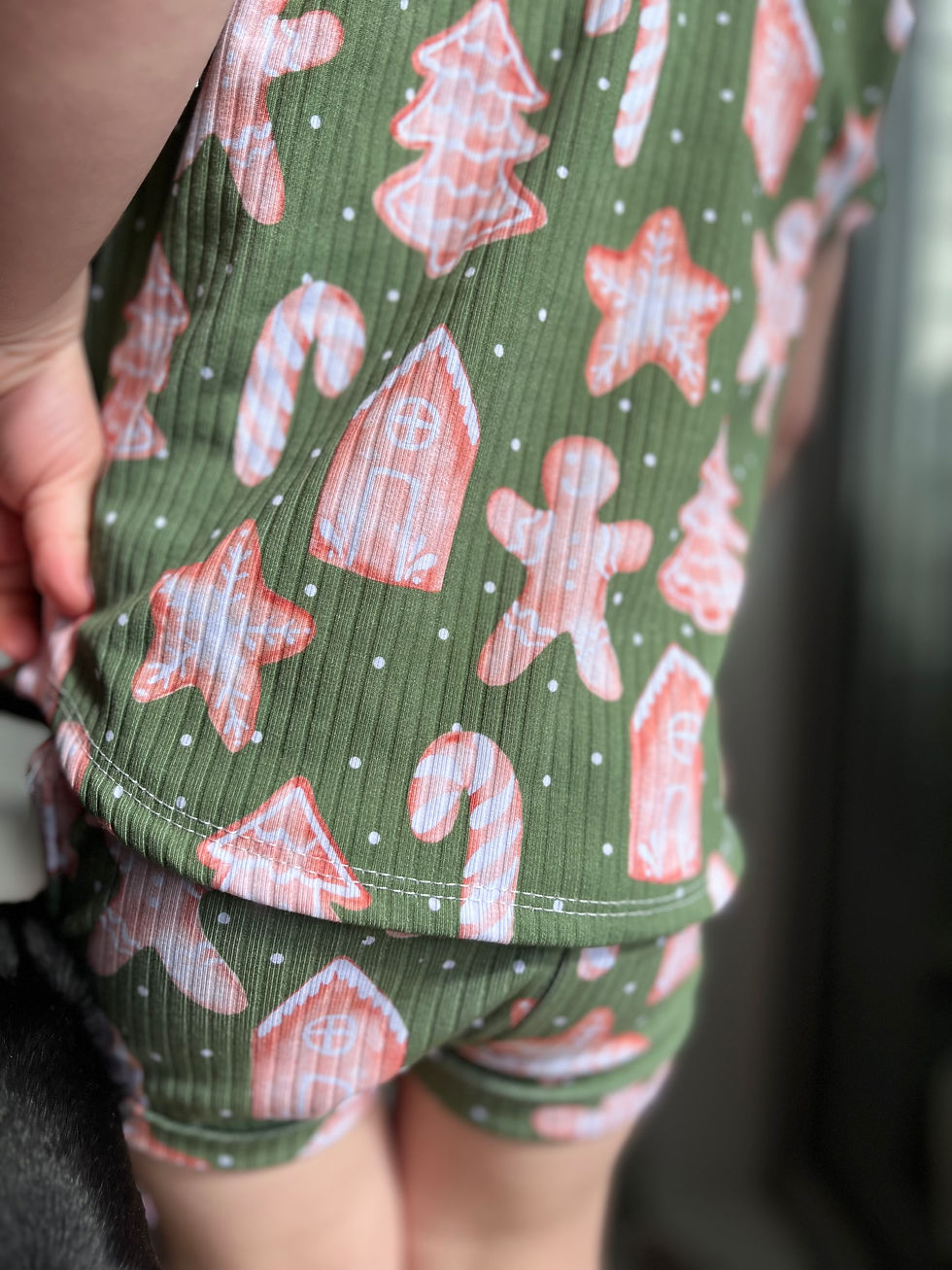
Rib knit is designed with vertical ridges created by alternating knit and purl stitches. It contains stretch due to its structure, and then has added stretch that comes from the lycra content. Rib comes in either polyester or cotton blends - ours is 95% cotton 5% lycra. They come in various ‘rib’ widths, which refers to how many stitches create the ridge, and how many are in the dip. Our rib is 4x2, which we think looks lovely and is very soft against the skin. It also looks nicer as full garments in this width,
Key Features of 3am Threads Rib Knit:
Extremely stretchy (especially horizontally)
Strong recovery
Textured, ribbed appearance
Ribbed on the right side of the fabric only - the wrong side is mostly flat
Best For:
Neckbands
Cuffs
Waistbands
Fitted tops and dresses
Matching sets
Rib behaves very differently from cotton lycra, even if the fibre content is similar. It stretches further and “snaps back” more firmly, which is why it’s often used for bands. If used to make the same pattern exactly as a cotton lycra, the rib version would have a firmer fit.
What Is French Terry?
French terry is a knit fabric that comes in two different types - looped or brushed. It has a slightly brushed surface on the front, but is generally smooth. Looped has small loops of fabric on the back, whereas brushed is ‘fuzzy’ feeling.
It’s thicker and more stable than cotton lycra or rib, but generally has less stretch and the recovery is often not as good. Often French Terry will have 2 way stretch only (horizontal) if the lycra content is low or the fabric has a very high gsm, so it’s always worth either checking the stretch percentage or getting a sample if you’re buying from elsewhere. Luckily, we’ve picked our favourite French Terry with all the features we like (including great stretch and decent recovery in both directions!) for you.
Key Features of 3am Threads French Terry:

4 way stretch - horizontal and vertical (with bigger vertical stretch percentage, but don’t go cutting cross grain unless you really have to or your print might be sideways!)
Lower stretch percentage than cotton lycra
Soft looped back
Heavier weight (280-300gsm depending on the batch)
Best For:
Jumpers
Light Trackpants
Lightweight hoodies
Relaxed-fit garments
French terry is ideal when you want structure and a little extra warmth without going full fleece.
Knit Fabric Comparison Chart:
Cotton Lycra vs Rib Knit vs French Terry
Here’s a simplified breakdown of our fabrics:
Feature | Cotton Lycra | Rib Knit | French Terry |
Stretch Type | 4-way | 4-way | Usually 2-way, but ours is 4-way |
Stretch Amount | Moderate–High | High–Very High | Moderate |
Recovery | Excellent | Excellent (with lycra) | Moderate |
Weight | Medium | Medium | Medium–Heavy |
Texture | Smooth | Ribbed | Smooth front, looped back |
Best For | Everyday garments | Bands + fitted pieces, loungewear | Jumpers + loungewear |
Sewing with 3am Threads Knits
If you’re browsing our preorder pages and are unsure which base to pick that suits your pattern:
Check the Fabric bases page for information on width of fabric and composition
Use the knit fabric comparison guide above
Or, reach out through email or on our instagram page! We’re always happy to help.
Holly and Jen
Comments